
What This Is: A complete biweekly calendar audit system with a meeting scorecard, 6 diplomatic communication templates, a time-reclaimed tracker, and advanced tactics. Designed to cut your meeting load by 30–50% in under 90 days.
warningWhy You Need This
Your calendar is a to-do list written by other people. Without active management, meetings multiply and never die — zombie meetings consume your maker time, kill productivity, and create the illusion of progress without actual output.
This toolkit gives you a repeatable system to audit, kill, and prevent meetings that don't serve your goals. Every two weeks, you spend 30 minutes and eliminate at least one meeting. Over 90 days, that compounds into hours of reclaimed focus time per week.
lightbulbHow to Use This System
- counter_1
Run Your First Audit: Use Part 1's checklist and scorecard to evaluate every meeting from the last 14 days.
- counter_2
Communicate the Changes: Part 2 has 6 ready-to-send templates for every scenario — internal deletes, client downgrades, and new meeting declines.
- counter_3
Track Time Reclaimed: Part 3's tracker turns calendar management into a measurable win. The Meeting Types Matrix gives you a quick-reference guide on which meetings to keep.
- counter_4
Prevent New Clutter: Part 4's 4-Question Filter stops low-value meetings before they hit your calendar. The advanced tactics (silent meetings, async-first decisions) reshape how your team works.
- counter_5
Repeat Every 2 Weeks: Meetings re-multiply without constant pruning. Make the audit a non-negotiable biweekly ritual.
checklistPart 1: Calendar Audit Checklist & Meeting Scorecard
A 30-minute audit process with a step-by-step checklist and a full meeting scorecard. Score every recurring meeting across 6 evaluation questions and route it to Delete, Downgrade, or Redesign.
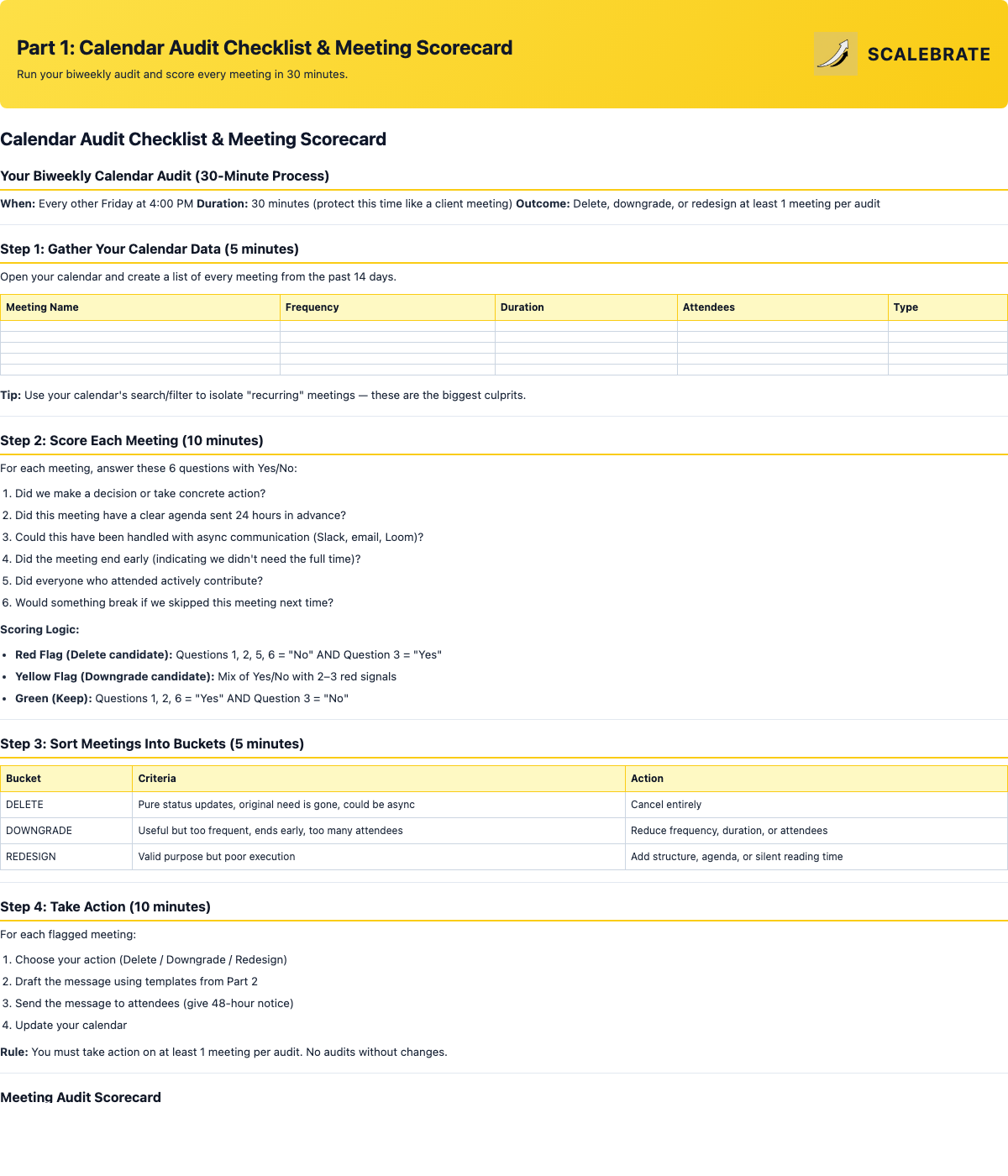
4-step audit process and a 6-question scorecard with scoring summary and action recommendations.
mailPart 2: Meeting Change Communication Templates
6 fill-in-the-bracket email scripts that handle every scenario: canceling internal meetings, downgrading frequency or duration, redesigning with structure, adjusting client check-ins, and politely declining new requests.
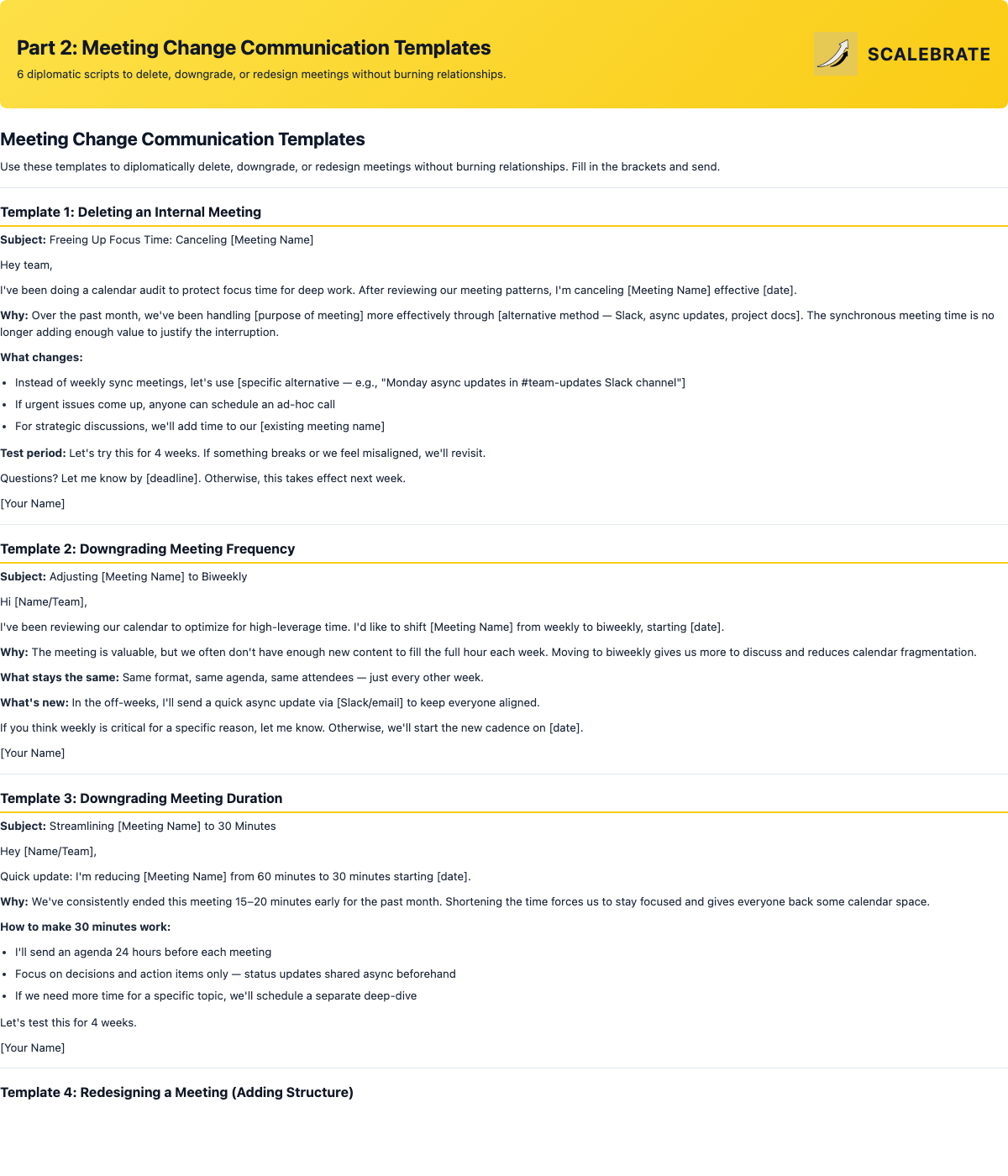
6 diplomatic email scripts for deleting, downgrading, redesigning, and declining meetings.
timelinePart 3: Time-Reclaimed Tracker & Meeting Types Matrix
A monthly tracker that turns every audit into a measurable win — log deletions, downgrades, and hours reclaimed each cycle. Paired with a 9-category Meeting Types Matrix that tells you instantly which meetings to keep, kill, or downgrade.
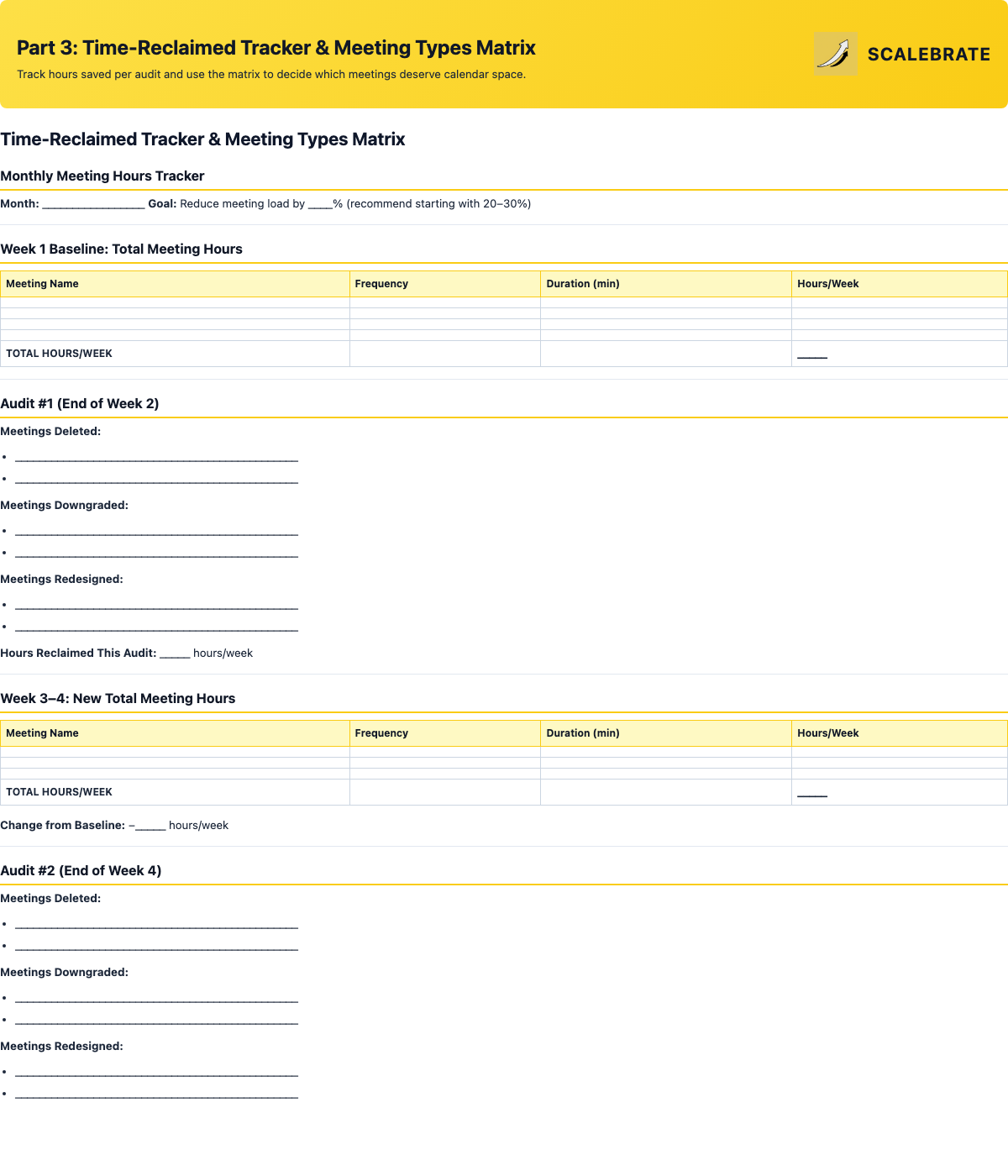
Monthly tracker with baseline, audit logs, summary stats, and a full meeting types decision matrix.
filter_altPart 4: Meeting Request Filter & Advanced Tactics
A 4-question filter that stops 40–60% of low-value meetings before they land on your calendar. Plus three advanced calendar tactics (silent meetings, no-agenda policy, async-first decisions) and 5 pro tips for long-term calendar mastery.
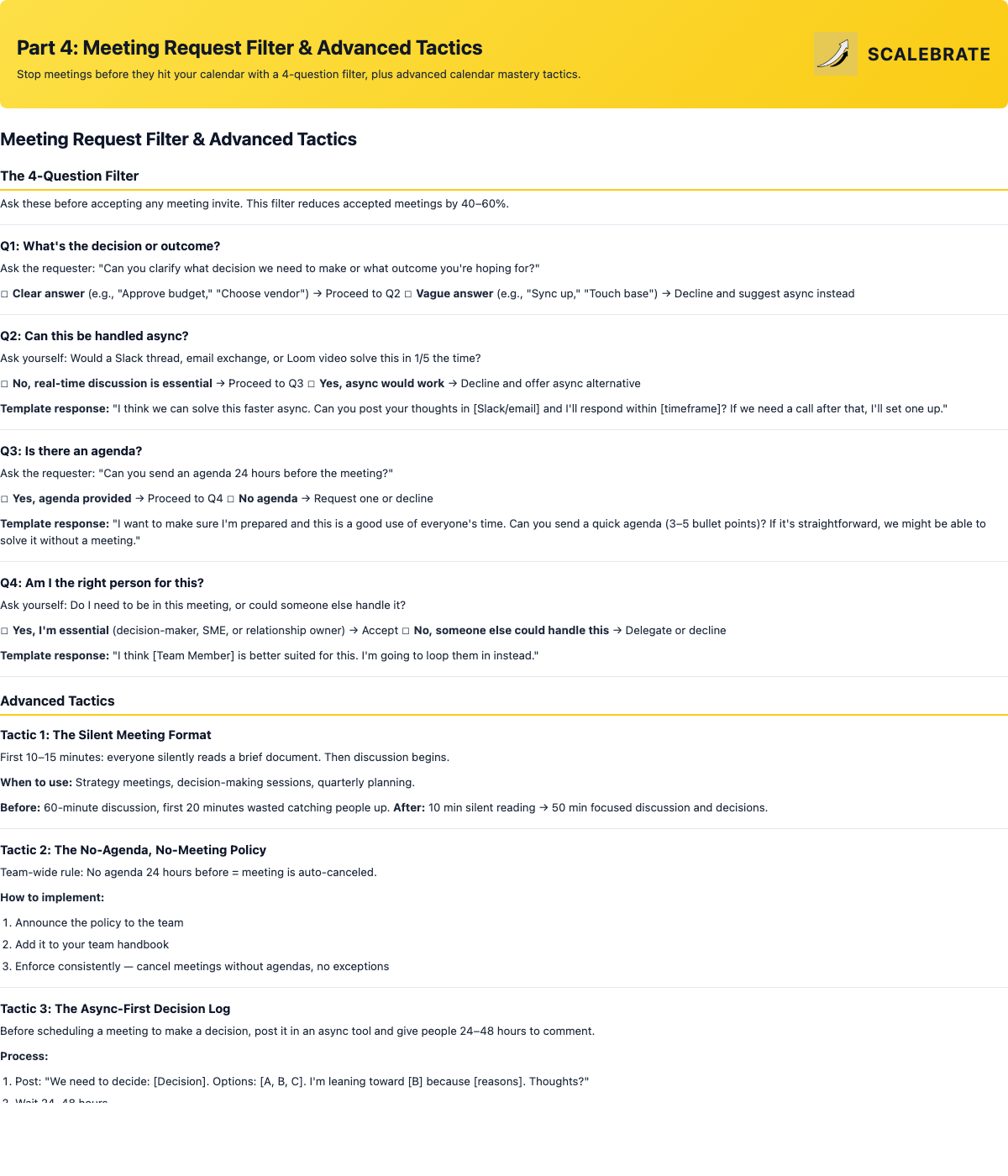
The 4-question inbound filter, 3 advanced tactics, and 5 pro tips for calendar mastery.
Tip 1: Always Provide an Alternative When Deleting — Don't just cancel. Explain how communication will happen instead. "Post updates in #standup-async by 9am: what you're working on, any blockers, last week's wins."
Tip 2: Make the Audit Non-Negotiable — Set a recurring calendar event every other Friday. Add a 24-hour reminder: "Tomorrow: Calendar Audit. Kill at least 1 meeting."
Tip 3: Ask Before Deleting Team Meetings — Quick poll: rate the meeting 1–5. If most rate 1–2, delete guilt-free. If most rate 4–5, keep it.
Tip 4: Protect Strategic Thinking Time — Only kill low-value status/sync meetings. Keep strategy sessions, planning, and retrospectives. The rule: keep meetings where decisions get made, delete meetings where information gets shared.