
What This Is: A 4-step prioritization playbook that uses two lenses—Goal Alignment (offense) and Consequence Prevention (defense)—to decide what to work on next. Designed to stop wasting weeks on the wrong things and balance growth with stability.
warningWhy You Need This
Most founders prioritize based on what feels urgent or what's exciting. Urgency is not the same as importance. Excitement is not the same as impact. The result: chaos—burning months on features nobody wants while critical bugs and at-risk customers fall through the cracks.
This playbook gives you a logic-based system to evaluate every task, balance offense and defense, catch fires before they start, and build a weekly rhythm that keeps you strategic instead of reactive.
checklistWhat's Included
- chevron_right
Two-Lens Prioritization Matrix — Goal Alignment vs. Consequence Prevention scoring for every task
- chevron_right
Task Categorization Worksheet — Brain dump, label, and rate in one sheet
- chevron_right
Impact-Urgency Scoring Template — Separate scoring guides for GA and CP tasks, combined into a priority matrix
- chevron_right
Cost of Delay Calculator — Break ties between competing priorities with a daily-cost formula
- chevron_right
Fire Prevention Audit — A monthly checklist across technical, financial, customer, and team risk areas
- chevron_right
Monday Morning Ritual — A 30-minute planning session to pick your Top 5
- chevron_right
Friday Afternoon Review — Measure impact, identify what to cut, and plan next week
- chevron_right
Strategic vs. Reactive Tracker — Weekly log to measure how much time you spend in each mode
timelinePlaybook Steps (In Order)
- counter_1
Step 1: The Two-Lens Framework & Task Categorization — Learn the GA/CP framework and categorize everything on your plate.
- counter_2
Step 2: Impact-Urgency Scoring & Prioritization Matrix — Rate tasks by impact and urgency, then combine into a single priority list.
- counter_3
Step 3: Cost of Delay Calculator & Fire Prevention Audit — Break ties between priorities and catch fires before they happen.
- counter_4
Step 4: Monday Morning & Friday Afternoon Rituals — A weekly rhythm that keeps you strategic, not reactive.
device_hubStep 1: The Two-Lens Framework & Task Categorization
Learn the Goal Alignment vs. Consequence Prevention framework, brain-dump and categorize your entire task list, and use the decision tree to route any new task that comes up.
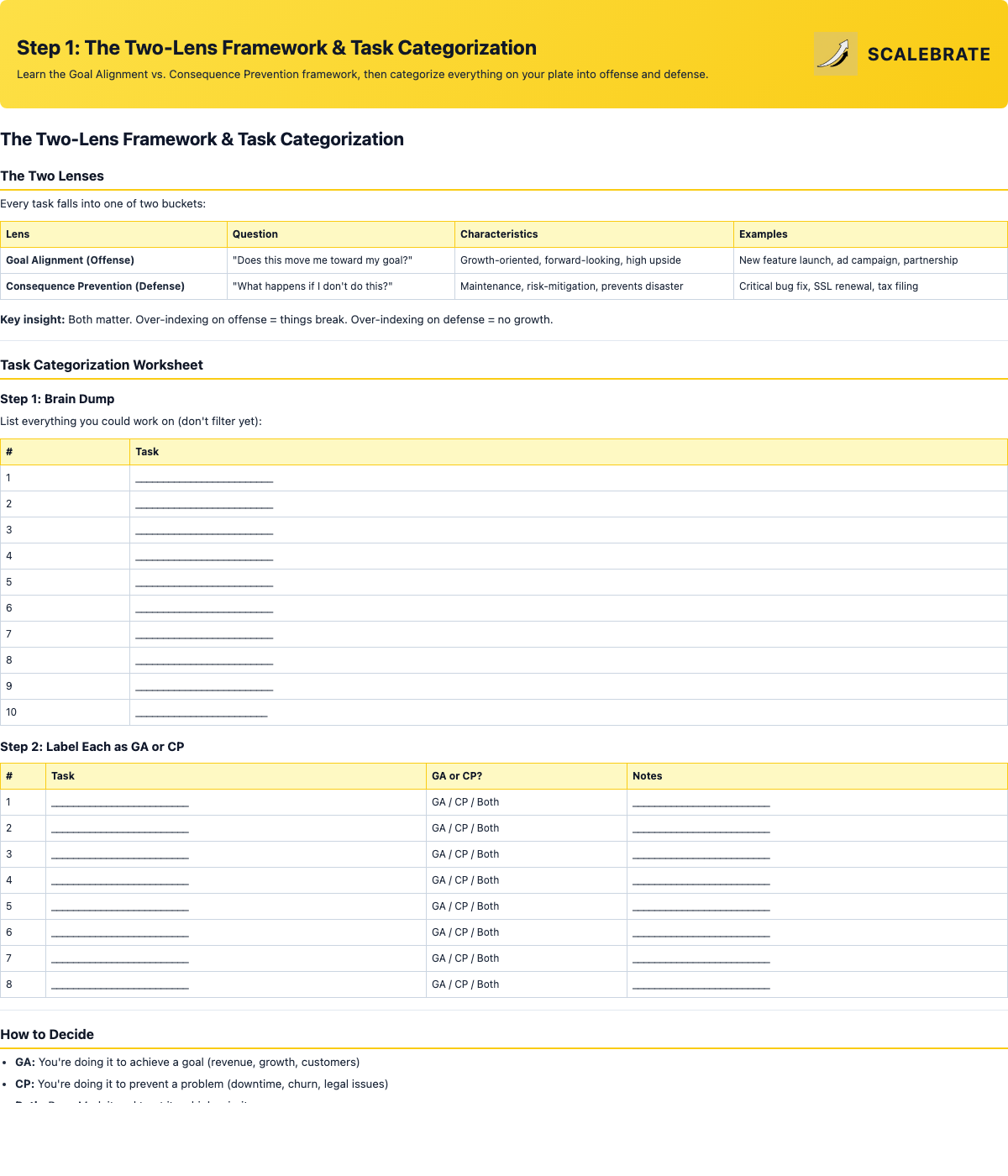
GA vs. CP framework, brain-dump categorization sheet, and a 5-step decision tree.
matrixStep 2: Impact-Urgency Scoring & Prioritization Matrix
Score GA tasks by impact and time-to-complete, CP tasks by severity and time-until-consequence, then combine everything into a single prioritized task list with clear actions.
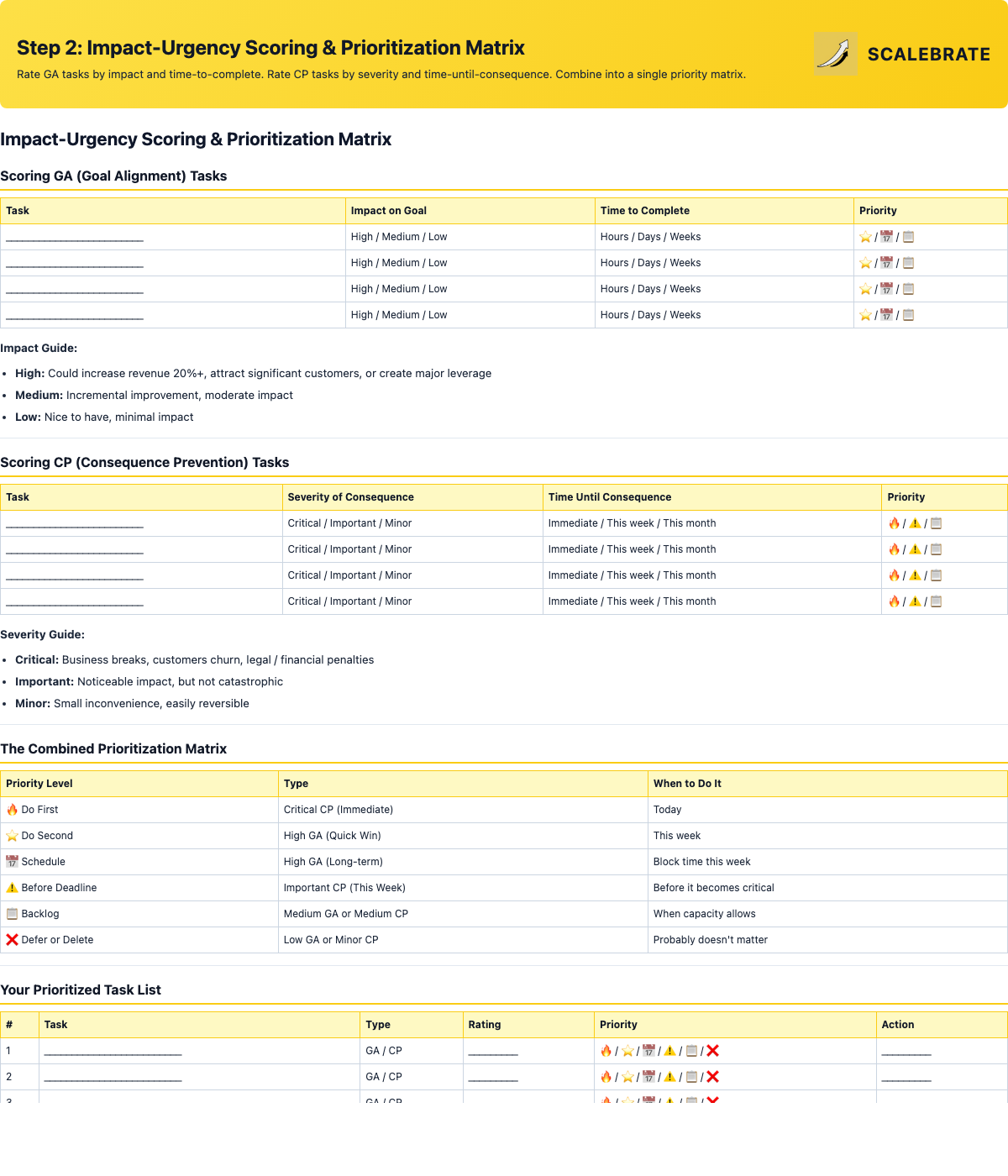
Separate GA and CP scoring tables with severity and impact guides, combined into a priority matrix.
calculateStep 3: Cost of Delay Calculator & Fire Prevention Audit
A daily-cost formula to break ties between competing priorities, common scenarios for quick reference, and a monthly fire prevention audit across 4 risk areas with an action log.
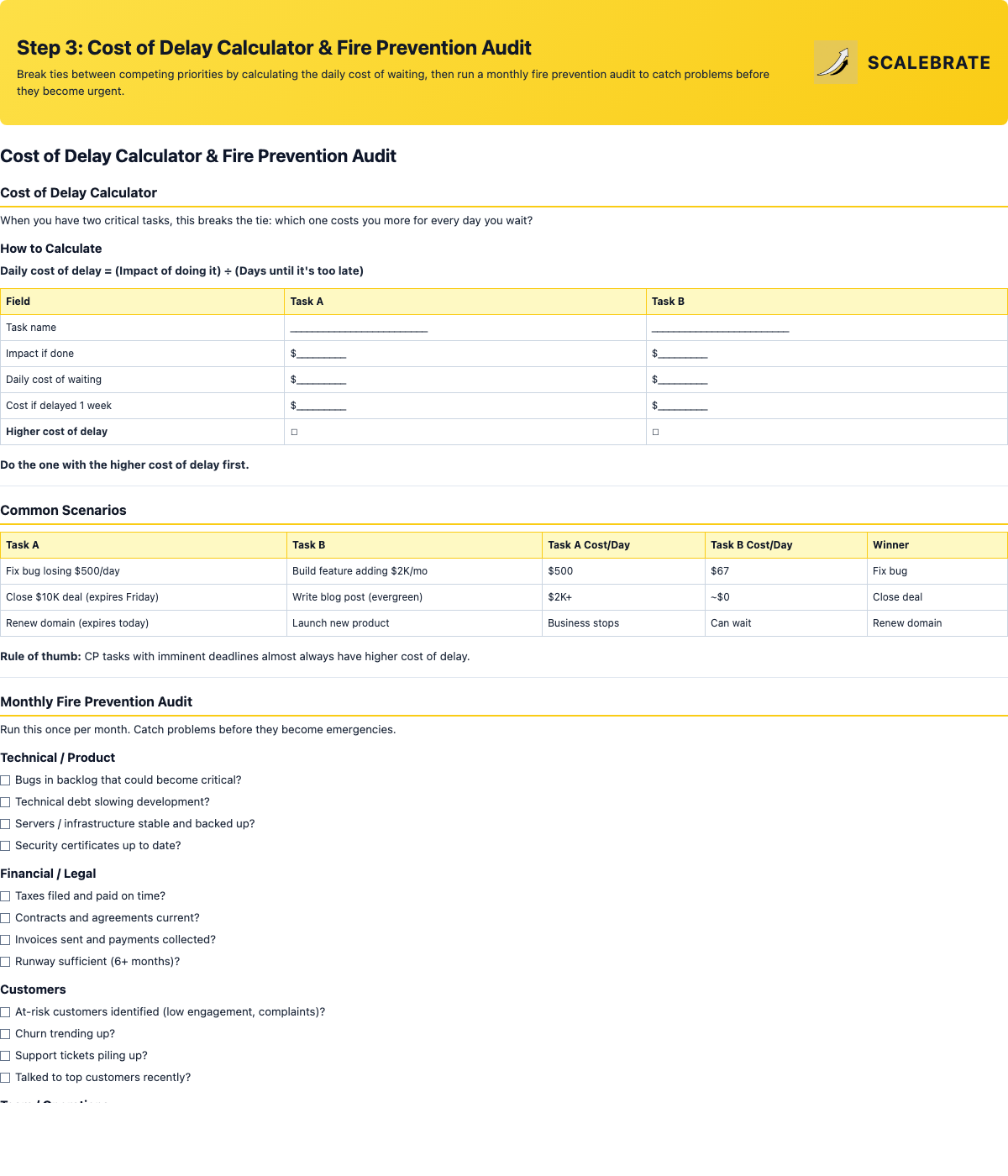
Cost of delay formula, A vs. B comparison template, and a 16-item monthly fire prevention checklist.
scheduleStep 4: Monday Morning & Friday Afternoon Rituals
A 30-minute Monday planning ritual to pick your Top 5 and time-block your week, a Friday review to measure what worked, and a Strategic vs. Reactive tracker to keep you honest.
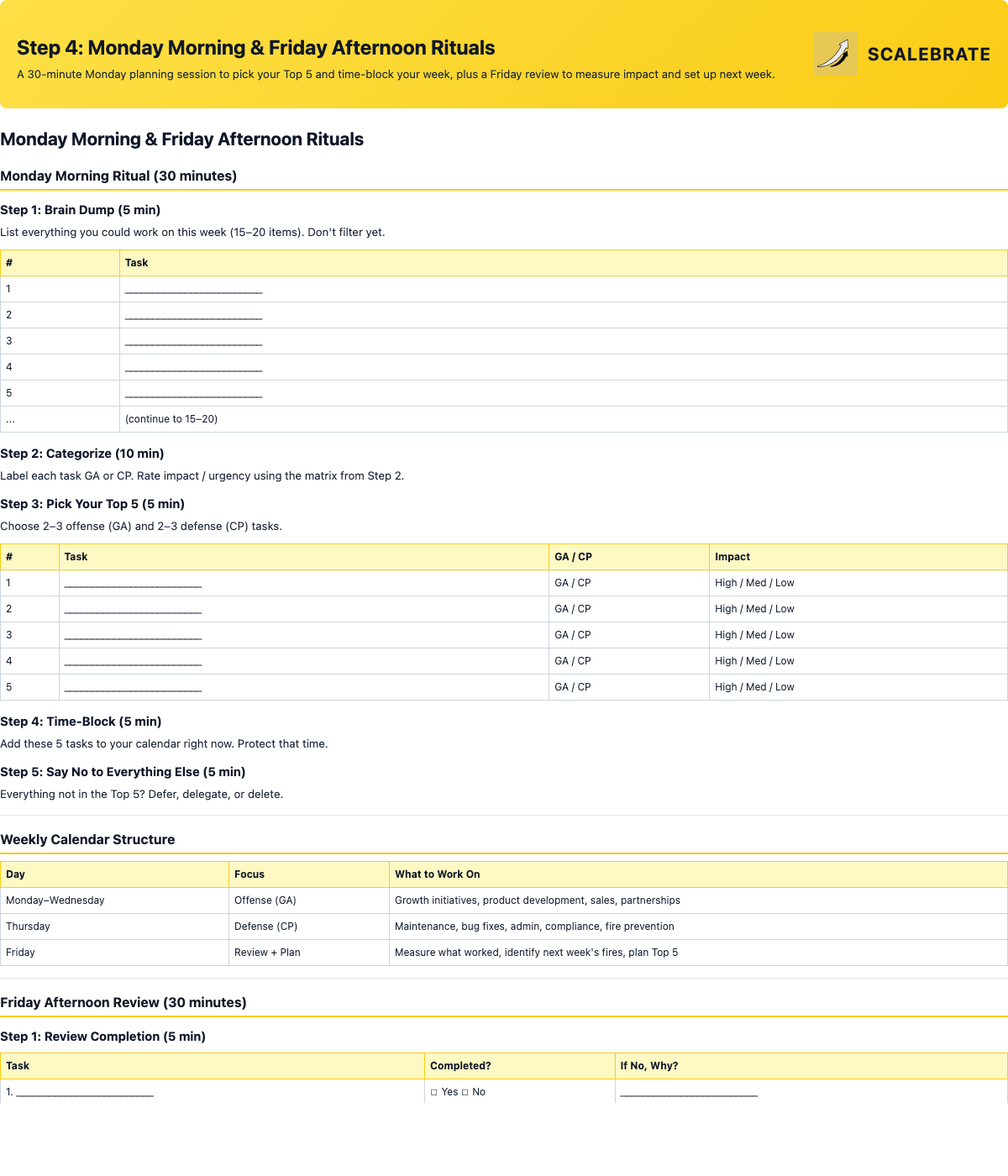
5-step Monday planning ritual, weekly calendar structure, Friday review template, and Strategic vs. Reactive tracker.
Tip 1: Only Plan Top 5, Not Top 20 — Planning 20 tasks and completing 8 feels like failure. Planning 5 and completing them feels like winning. More actually gets done.
Tip 2: Thursday Is "Keep the Lights On" Day — Monday–Wednesday you build. Thursday you maintain. Friday you plan. This structure keeps you out of reactive mode.
Tip 3: Ask "What Breaks If I Don't Do This?" — If the answer is "nothing," it goes to the bottom of the list. Simple.
Tip 4: Track Strategic vs. Reactive Hours — If you're 70% reactive, that's your wake-up call. The Fire Prevention Audit is your fix.